30 yearsseparation engineering since 1993
PETRONAS-group recordthree decades of delivered work
Design → Commissioningthe whole system, in-house
Genuine Pentairvalidated media, backed in-region
GENUINE PENTAIR TECHNOLOGY
Produced water typically carries up to 1,000 ppm hydrocarbon continuously and to 50,000 ppm during upsets; even 100 ppm slipping through a conventional system is 26,280 gallons of hydrocarbon a year into downstream equipment — and lost revenue. The hazy, emulsified fraction needs weeks of gravitational disengagement time, which no offshore residence tank has. On an FPSO, the answer cannot be a bigger tank — deck space and topside weight rule it out.
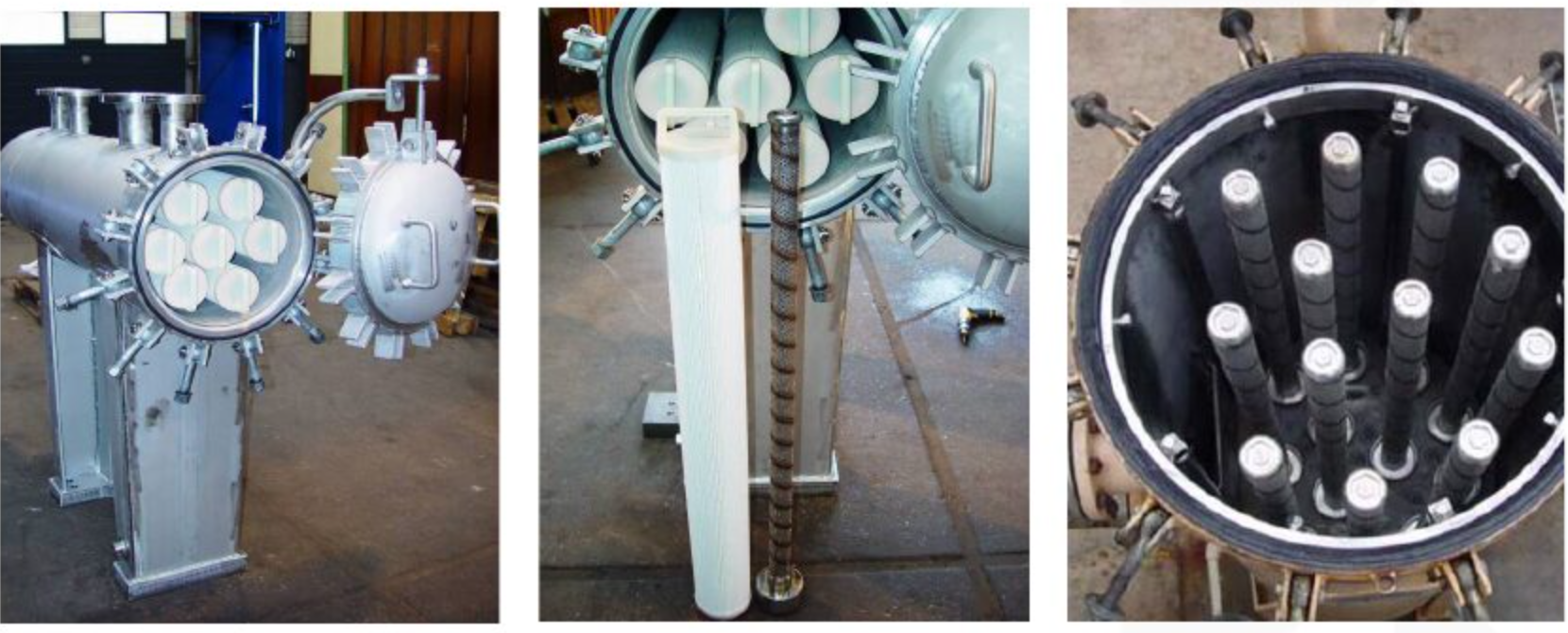
HRT couples the ProcessOR vessel design and coreless solids filtration with high-performance liquid-liquid coalescing. It is modular and scalable — sized for new topsides or retrofitted into an operating unit — and needs minimal operator intervention.
Pentair’s Pure Pack packages produced-water treatment into a containerized, remotely monitored unit — delivering outlet quality below 50 mg/L at an operating cost around US$0.15–0.25 per barrel, available on lease and service models rather than capital purchase. First units are proving out in Oman; ITSB brings the program to Asia-Pacific operators.
For the platform record behind this page — including the 30 mg/L discharge story — see Offshore / FPSO.
On North Sea platforms, COMPAX cartridges engineered for hydrocarbon and glycol service replaced a swelling, collapsing incumbent: 2.4× the change-out differential pressure, fewer and larger elements, and change-outs the crew reported as significantly easier and quicker. The same engineering applies to MEG and condensate duty on Asia-Pacific developments.